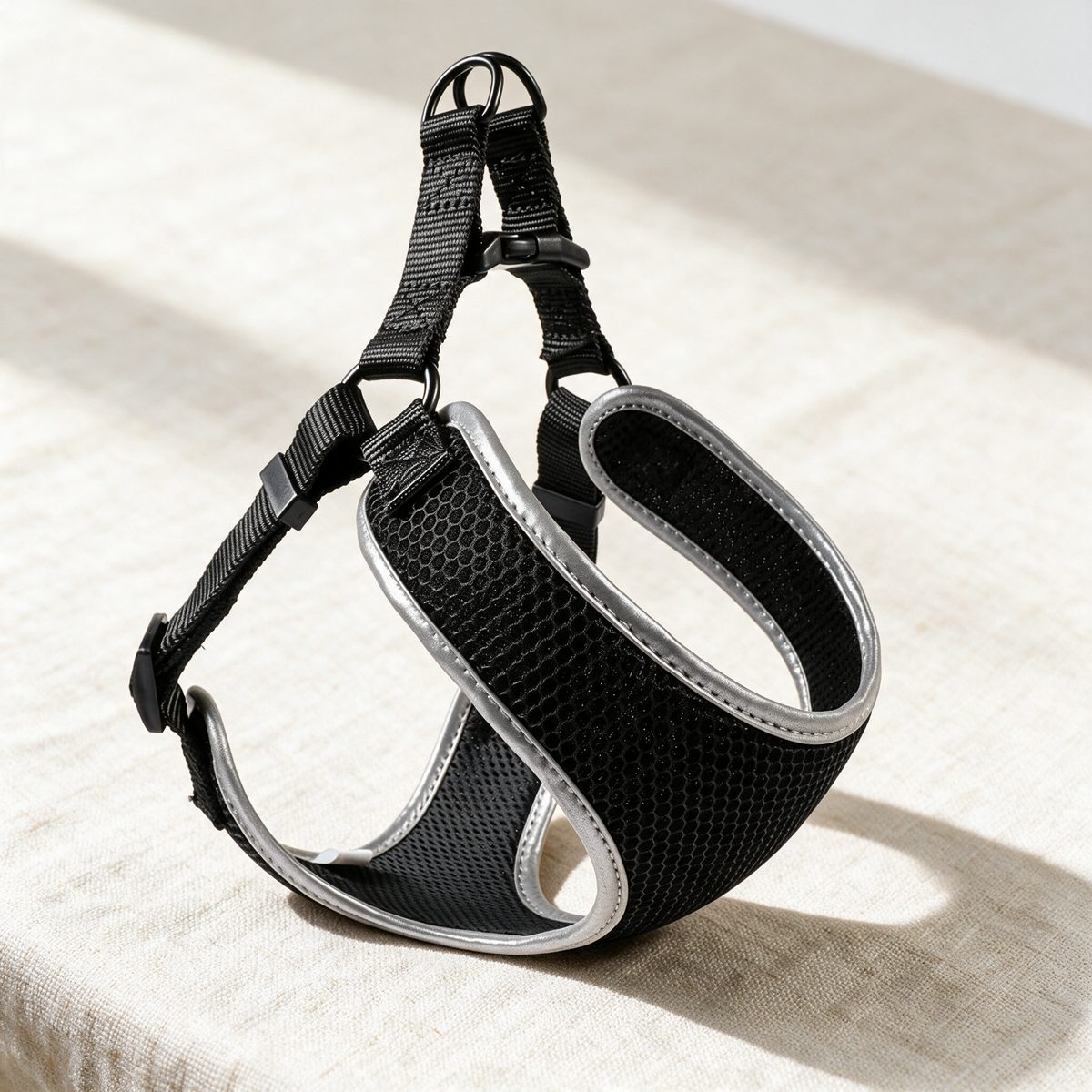
If your small dog has just been diagnosed, this is often the first question, and it usually comes with guilt. Here is what the veterinary sources actually say, without the scare stories.
What vets say causes tracheal collapse
Tracheal collapse is a weakening of the C-shaped cartilage rings that keep the windpipe open. VCA says it is seen more often in Chihuahuas, Pomeranians, Shih Tzus, Lhasa Apsos, toy poodles and Yorkshire terriers, that a genetic factor is suspected, and that any breed or size can be affected. Most dogs are middle-aged or older when it shows up.
The American College of Veterinary Surgeons (ACVS) names two things that raise the odds of signs appearing: being overweight and living with smokers. Neither VCA nor ACVS lists wearing a collar as the cause.
So if your dog wore a collar for years and now has tracheal collapse, the collar is unlikely to be the reason. Dogs who never pulled a day in their lives get it too.
What a collar does do
A collar sits across the front of the neck, over the windpipe. When the leash goes tight, the force lands there. Researchers who put a pressure sensor under the throat side of a collar measured that force on ordinary walks, and found it changed with the collar's material. Another study found that pulling against a collar raised pressure inside the eyes, while pulling against a harness did not produce a significant rise.
In a dog whose windpipe is already soft, that pressure matters. ACVS lists coughing when the collar is pulled as a sign of tracheal collapse, and names collar pressure among the triggers. VCA lists pressure on the windpipe, such as from a collar, among the things that make the cough worse.
Cause versus trigger
| What the sources say | |
|---|---|
| Does a collar cause tracheal collapse? | Not described as a cause by VCA or ACVS |
| Does a collar set off the cough? | Yes, collar pressure is a listed trigger |
| Should a dog with tracheal collapse walk on a collar? | No, both advise a harness instead |
| Is a collar fine for a healthy large dog? | For most, yes, especially one that walks on a loose leash |
Why some websites say collars cause it
A lot of the pages that rank for this question are written by companies selling harnesses, and some go further than the evidence. We sell a harness too, so read us with that in mind. The honest version is shorter and still useful: collars are not shown to cause the condition, collar pressure does trigger the cough, and that alone is reason enough to move the leash off the neck.
What to do now
- Take the leash off the neck. Walk on a harness that leaves the front of the throat clear. Our guide to choosing a harness for tracheal collapse lists what to check.
- Keep the tag, move it. Hang the ID tag from the harness ring at the back, or ask your vet about a light tag-only collar.
- Work on the other triggers. Weight, smoke and heat are all on the vets' lists. Our walking routine covers them.
- Let go of the guilt. You were following the most common advice there is for dogs, and the condition is thought to be largely inherited.