What tracheal collapse is
The trachea, or windpipe, is the tube that carries air from the throat to the lungs. It is held open by a stack of C-shaped rings of cartilage, with a thin band of muscle closing the gap at the back of each ring. In tracheal collapse those rings lose their stiffness. Instead of staying round, the tube flattens as the dog breathes in or out, and the airway narrows.
A flattening windpipe irritates itself. The lining rubs, the dog coughs, the cough irritates the lining further, and a fit can run for a minute or more. That cycle is why the cough is so persistent and why owners describe it as coming in bursts.
Which dogs get it
Any dog can develop tracheal collapse, but it shows up far more often in small breeds. The breeds both VCA and the American College of Veterinary Surgeons (ACVS) name most often are:
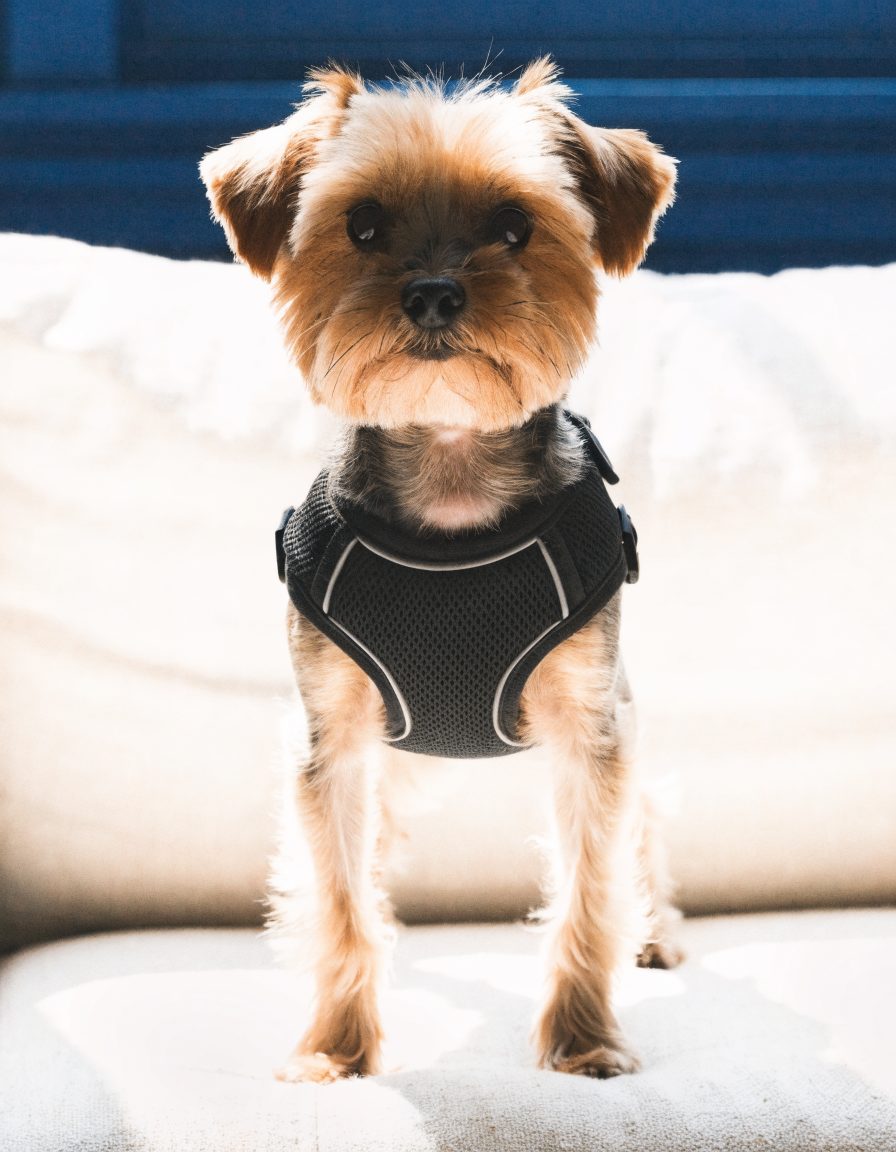
- Yorkshire terriers
- Pomeranians
- Chihuahuas
- Toy and miniature poodles
- Shih Tzus and Lhasa Apsos
VCA notes that a genetic factor is suspected. Most dogs are diagnosed in middle age or later, roughly 4 to 14 years old, though some young dogs are affected. ACVS adds two things that raise the odds of a dog showing signs: being overweight, and living with a smoker.
The signs
The sign almost every owner notices first is the cough: dry, harsh, and often compared to a goose honk. ACVS lists these signs:
- A harsh, dry cough
- Coughing when the dog is picked up, or when the collar is pulled
- Difficulty breathing and tiring quickly on walks
- Coughing or turning blue when excited
- Wheezing when breathing in
- Fainting, in more severe cases
If you are not sure whether the sound you are hearing is a honk or something else, our guide to reverse sneezing versus tracheal collapse compares the two side by side.
What sets off a coughing fit
Owners usually learn the triggers before they learn the diagnosis. According to VCA and ACVS, the cough tends to get worse:
- With excitement: the doorbell, a visitor, the leash coming off the hook
- When there is pressure on the windpipe, such as a collar pulling on a walk
- In hot or humid weather
- Right after eating or drinking
- At night
- Around smoke and other irritants, including smoke residue carried on clothes and hair
How vets confirm it
A vet may suspect tracheal collapse during the exam if light pressure on the windpipe sets off a cough. Confirming it takes imaging, and it is not always caught the first time. ACVS describes the usual tools:
| Test | What it shows |
|---|---|
| Chest and neck X-rays | Often the first step. They can miss a collapse, because the windpipe changes shape from moment to moment. |
| Fluoroscopy | A moving X-ray that watches the windpipe while the dog breathes. |
| Endoscopy | A camera inside the airway. The most detail, and fluid can be sampled for infection. |
| Bloodwork and echocardiogram | Checks overall health and the heart. VCA notes heart disease can cause a similar cough and can be present at the same time. |
What vets do about it
There are two broad paths, and most dogs start with the first.
Medical management
This means weight loss for dogs that need it, medication for airway spasm and inflammation, cough control to break the cycle, antibiotics if there is an infection, and removing irritants such as smoke. ACVS reports that up to about 70% of dogs improve this way, especially dogs with milder collapse, and that it is continued for life. VCA also recommends monitoring liver function, because many affected dogs have liver disease as well.
Surgery
For dogs that do not respond, a specialist surgeon can support the windpipe. ACVS describes two methods: plastic rings placed around the outside of the windpipe in the neck, and a stent placed inside the airway without an incision. ACVS reports about 75% of dogs improve after rings, and for stents, 95% improve immediately and 90% are markedly improved at follow-up. Both carry real risks, and dogs over 6 or with other airway disease tend to have more complications.
Daily life after the diagnosis
Most of what changes is at home, and most of it is in the owner's hands:
- Walk on a harness, not a collar. VCA and ACVS both say so. The point is that nothing pulls across the front of the neck. Our guide on choosing a harness for a dog with tracheal collapse covers what to check.
- Keep the dog lean. Extra weight around the chest and neck makes breathing harder. VCA says a healthy weight reduces how severe the signs are.
- Clear the air. No smoking indoors, and remember that smoke on clothes counts. Go easy on sprays and strong cleaners.
- Plan around heat. Walk in the cool part of the day in summer. ACVS suggests a humidifier in winter when heating dries the air.
- Keep greetings calm. Excitement is a trigger, so low-key arrivals and departures can mean fewer fits.
Our walking routine for dogs with tracheal collapse puts these into a day.
When it is an emergency
Call your vet or an emergency clinic straight away if your dog has blue or gray gums, faints, or cannot settle its breathing after a coughing fit. Do not wait to see if it passes.