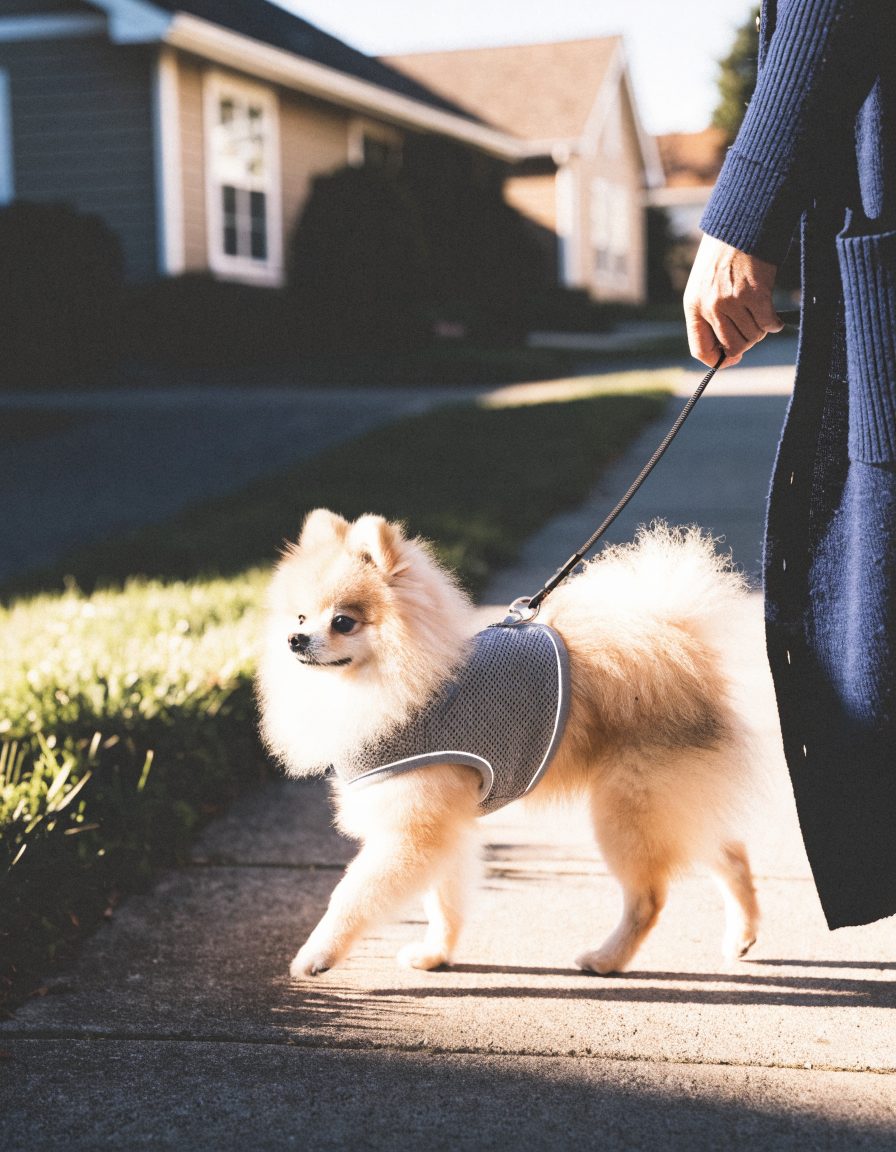
A diagnosis of tracheal collapse does not mean the end of walks. It means walking differently. Every point below comes from what VCA and the American College of Veterinary Surgeons (ACVS) tell owners, turned into a routine you can follow tomorrow. Your vet knows your dog, so their advice comes first.
Before the walk
Gear: harness on, collar leash off
VCA and ACVS both say to use a harness instead of a collar. Choose one where nothing crosses the front of the neck, so a sudden lunge lands on the chest. If your dog wears a tag collar, clip the leash to the harness only. Our harness checklist covers what to look for.
Timing: pick the cool hour
VCA lists hot and humid weather as a cough trigger. In summer, walk early in the morning or after sunset. Avoid walking straight after a big meal or a long drink, which VCA also lists as triggers.
A calm start
Excitement is one of the most common triggers. If the sight of the leash sends your dog spinning, try this: pick up the harness, wait for calm, put it on, wait for calm again, then open the door. It takes a few days for most dogs to learn that calm is what makes the walk happen.
During the walk
- Easy pace, with rests. Let your dog stop and sniff. A sniffing break is a rest that does not end the walk.
- Shorter, more often. Many owners find two or three short walks easier on the dog than one long one. Ask your vet what suits yours.
- Avoid the hot spots for pulling. Cross the street before the barking dog, not beside it.
- Steer clear of smoke and fumes. ACVS names smoke as an irritant, including smoke carried on clothes.
- Carry water in warm weather, and offer small amounts, since VCA lists drinking among the cough triggers.
If a coughing fit starts
- Stop walking and let the leash go slack.
- Stay calm and quiet; your voice sets the tone.
- Move into shade if it is warm.
- Check the gums. Pink is normal. Blue or gray is an emergency.
- Once it settles, head home at an easy pace or carry your dog, supporting the chest and the rear.
Call your vet or an emergency clinic straight away for blue or gray gums, fainting, or breathing that will not settle.
At home, between walks
| What | Why, according to the sources |
|---|---|
| Keep the dog lean | VCA says a healthy weight reduces how severe the signs are; ACVS lists weight loss in every plan |
| No smoking indoors, and change clothes after smoking | ACVS names smoke, including residue on clothes and hair, as a trigger |
| Humidifier in winter | ACVS suggests one when heaters dry the air |
| Calm greetings at the door | Excitement is a listed trigger |
| Lift under the chest and rear | Coughing when picked up is a listed sign |
| Regular vet rechecks | VCA calls the condition progressive and advises monitoring liver function |
A sample day
- 7:00 Short morning walk on the harness, before the heat. Sniffing allowed.
- 8:00 Breakfast, then a rest. No walk straight after eating.
- 13:00 A few minutes in the yard or a shaded patch, if it is cool.
- 19:30 Evening walk once the day cools, calm start at the door.
- Night Humidifier on in winter, smoke-free room.
For the medical side, the tests and what vets do, read our full guide to tracheal collapse in dogs.